Not every skin can be listed for any price you like. The R6 Marketplace minimum price rule stops very cheap items from flooding the market, and this guide explains how it works and how to deal with it.
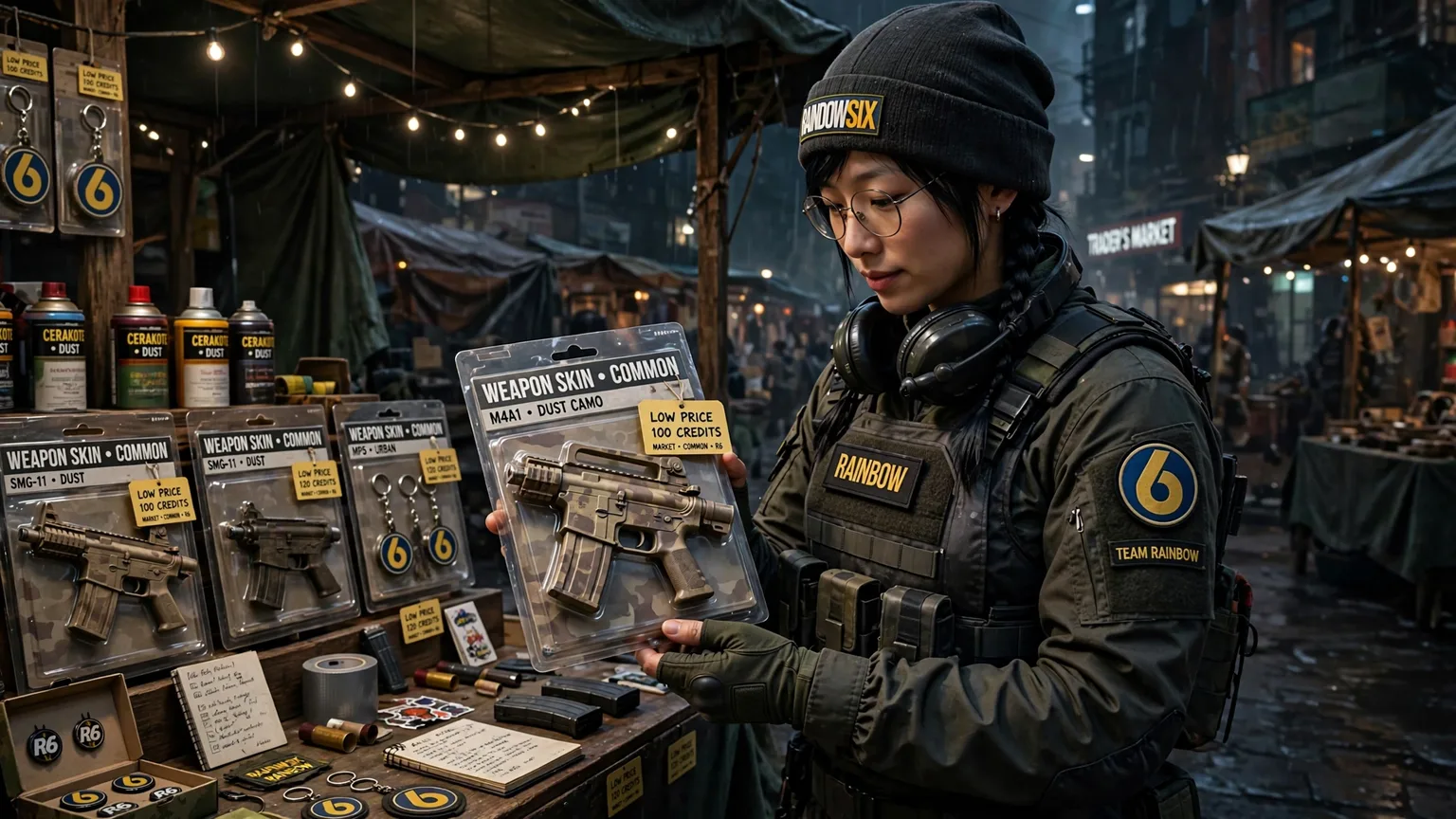
What the Minimum Price Is
The lowest amount the marketplace will accept
The minimum price is the lowest amount the R6 Marketplace will accept for a listing. If you try to list an item below this amount, the marketplace will not let you create the listing. The exact minimum can vary, and it is set by the marketplace system rather than by individual sellers. This means that even if you are happy to sell an item for almost nothing, the system will stop you from listing it below the minimum.
It keeps the marketplace clean
The minimum price exists for a practical reason. Without it, the marketplace would be flooded with thousands of listings for items worth only a few credits. That flood would make it harder for buyers to find the items they actually want, and it would clog the system with trades that cost more to process than they are worth. The minimum keeps the marketplace clean and focused on items that are worth trading.
Minimum price is not the same as market price
It is important to understand that the minimum price is not the same as the market price. The market price is what buyers are actually willing to pay, and it is set by supply and demand. The minimum price is a floor set by the system. An item can have a market price well above the minimum, or a market price so low that it falls below the minimum. When the market price drops below the floor, the item becomes effectively unlistable, and that is where many new traders get confused.
Why a Minimum Price Exists
It reduces spam
The minimum price protects the marketplace in several ways. First, it reduces spam. Without a floor, players could list the same cheap item hundreds of times, hoping that one of the listings sells. That would make the marketplace harder to use for everyone. The minimum discourages this behaviour by making very low value listings impossible.
It protects the fee system
Second, the minimum protects the fee system. Every sale carries a 10 percent fee, and on a very cheap item the fee would be almost nothing. Processing a sale still costs the system time and resources, even when the item is nearly worthless. The minimum makes sure that each completed sale is worth processing. It keeps the marketplace efficient for buyers, sellers, and the system itself.
It protects new traders from wasting time
Third, the minimum protects new traders from wasting their time. Listing an item for a tiny number of credits might feel like free money, but the payout after the fee would be even smaller. Managing dozens of tiny listings takes time that could be better spent on items with real value. The minimum gently pushes traders toward items that are worth their attention.
It helps keep prices stable
Finally, the minimum helps keep prices stable. When very cheap items flood the market, they can drag down the perceived value of other items. A clean marketplace with a sensible price floor gives buyers more confidence, because they know that every listing meets a basic standard. That confidence helps the whole market work better for everyone.
Which Items Are Affected
Common and low rarity items
The minimum price mainly affects common and low rarity items. These are the skins that many players already own, often received from packs or basic rewards. Because they are so common, their market value is naturally low. When supply is high and demand is low, the price falls, and some of these items end up below the minimum. That is why new players often find that their first skins cannot be listed.
Uncommon and rare items
Uncommon and rare items are less likely to be affected, because their market prices are usually higher. However, even a rare item can fall below the minimum if it is very unpopular or if many players are selling it at once. Popularity matters as much as rarity. A rare skin for a weapon nobody uses can be worth less than a common skin for a popular weapon. Always check the actual market for your specific item rather than assuming its rarity tells you the price.
Attachment skins, charms, and small cosmetics
Attachment skins, charms, and other small cosmetics are often affected too. These items are usually cheaper than weapon skins, and many of them have low market values. Some are tradable and worth listing, while others fall below the minimum. The only way to know for sure is to check the item in the marketplace and see whether the system lets you list it.
Below the minimum does not mean worthless
It is worth noting that the minimum does not mean your item is worthless. An item that cannot be listed might still be useful in the game, or it might become more valuable later if the market changes. Do not delete or discard items just because you cannot sell them today. Markets change, and an item that is cheap now could be worth more after a future update or event.
How to Check the Minimum for Your Item
Checking whether your item meets the minimum is straightforward.
- Open the marketplace in the game and find the item in your inventory. Select the option to sell it. The marketplace will show you the current market information for that item, including the lowest sell price and the highest buy price. If the item can be listed, you will see the price entry field and you can enter your price. If the item cannot be listed, the sell option will be unavailable or the system will show a message explaining why.
- Look at the order book for your item. If there are active buy and sell orders, the item is tradable and has a live market. The lowest sell price tells you the current floor of the market. If that price is close to the system minimum, the item is only just tradable, and you should think carefully about whether listing it is worth your time.
- If you are unsure whether an item is tradable at all, our guide on What Can You Sell on R6 Marketplace explains how to check. It covers the difference between items that are bound to your account and items that can be traded, so you can quickly work out which of your skins are worth listing.
- Remember that the minimum price is not shown as a single number that applies to every item. It works as a floor for each listing, and the practical test is simple. Try to list the item. If the system accepts your price, you are above the minimum. If it does not, you are below it. This hands on check is faster than trying to find a published number, because the exact floor can change over time.
What to Do With Items Below the Minimum
Do nothing and wait
Finding out that an item is below the minimum can be frustrating, especially if you were hoping to sell it. The first thing to do is nothing. Do not rush to get rid of the item. Keep it in your inventory and check its market again in a few weeks. Prices change constantly, and an item that is below the minimum today might rise above it after a game update, a new season, or a change in popularity.
Use the item yourself
You can also simply use the item. A skin that cannot be sold is still a skin you can equip and enjoy in the game. Many players focus so much on trading that they forget to enjoy the cosmetics they already own. If you like how a skin looks, use it. Its value as something you enjoy is separate from its value on the marketplace.
Keep it for a collection
Another option is to keep the item as part of a collection. Some players collect skins by theme, by operator, or by weapon, and a cheap item can still complete a set. Collections are a personal goal, not a financial one, and they can make the game more fun. An item that is worth very little in credits might be worth a lot to your collection.
Do not trade outside the marketplace
What you should not do is try to work around the minimum by trading outside the marketplace. Some players offer cheap items in unofficial trades, hoping to get a little value for them. These trades have no protection and are often scams. The small amount you might gain is not worth the risk to your account. If an item cannot be listed, accept that and move on to items that can.
Pricing Low Value Items Smartly
Price at or slightly below the lowest seller
When an item is only just above the minimum, smart pricing matters even more. A small difference in price can decide whether your listing sells or sits unsold for weeks. Start by checking the lowest current sell price for the item. If you price at or slightly below that level, your listing has the best chance of selling quickly. Pricing above the lowest seller usually means a long wait, because buyers will choose the cheaper listing first.
Think about the payout, not just the price
Think about the payout, not just the price. On a low value item, the 10 percent fee takes a noticeable share of your earnings. An item listed at 50 credits pays out 45 credits. An item listed at 30 credits pays out 27 credits. Ask yourself whether the payout is worth the effort of creating and managing the listing. If the answer is no, it may be better to keep the item or wait for its price to rise.
| Listing price | Payout after the 10 percent fee |
|---|---|
| 50 R6 Credits | 45 credits |
| 30 R6 Credits | 27 credits |
Timing can help
Timing can help with low value items. Prices often rise during seasonal events, when more players are active and looking for skins. An item that struggles to sell during a quiet month might sell quickly during an event. If you are not in a hurry, waiting for a busier period can turn a slow listing into a quick sale. Our guide on R6 Skin Prices in 2027 explains how events and seasons affect prices.
Avoid listing many low value items at once
You should also avoid listing many low value items at once. Managing a large number of tiny listings takes time and attention. It is usually better to focus on a smaller number of items with real value, and to list low value items only when you have a clear reason to do so. Quality beats quantity in marketplace trading, especially for new sellers who are still learning the system.
Minimum Price vs Market Price
Two different numbers
New traders often confuse the minimum price with the market price, so it is worth explaining the difference clearly. The minimum price is a floor set by the system. It is the lowest price the marketplace will accept for a listing. The market price is the price that buyers and sellers actually agree on, and it is set by supply and demand. The two numbers are related, but they are not the same.
| Minimum price | Market price | |
|---|---|---|
| Set by | The marketplace system | Supply and demand |
| What it is | The lowest price the marketplace accepts | The price buyers and sellers agree on |
| How it moves | A fixed floor for each listing | Rises and falls with demand |
How the market price moves around the floor
The market price is usually above the minimum. When many buyers want an item and few sellers offer it, the market price rises well above the floor. When few buyers want an item and many sellers offer it, the market price falls toward the floor. If it falls below the floor, the item cannot be listed at all. This is why some items disappear from the marketplace even though players still own them.
Use the gap as a signal
Understanding this difference helps you make better decisions. If an item's market price is close to the minimum, it is a sign that demand is weak. You can still list it, but you should expect a slow sale and a small payout. If an item's market price is well above the minimum, demand is healthy, and your listing is more likely to sell quickly. Use the gap between the market price and the minimum as a quick signal of how active the market is for that item.
The gap also tells you about risk
The gap also tells you about risk. An item priced close to the minimum has little room to fall, but also little room to rise. An item priced well above the minimum has more room to move in both directions. Neither situation is good or bad on its own. What matters is whether the price, the payout, and the likely waiting time make sense for your goals.
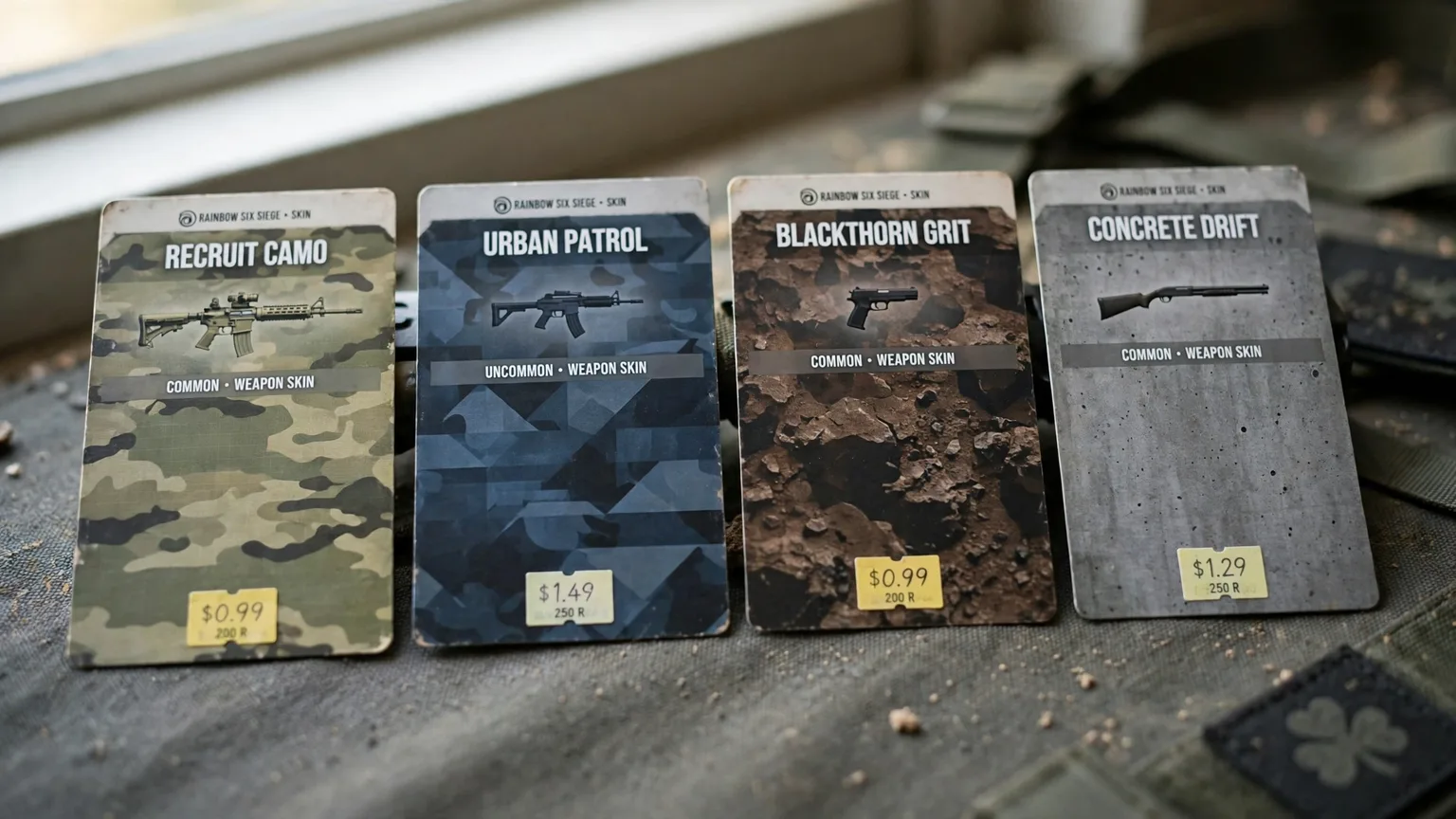
Your Options When an Item Sits Below the Minimum
| Option | When it fits | Downside |
|---|---|---|
| Keep it and check again later | Price may rise after an update or event | You wait with no guarantee |
| Equip it and enjoy it | You like how the skin looks | No credits earned |
| Hold it for a collection | It completes a set you care about | Ties up an inventory slot |
| Sell a different item instead | Another skin is above the minimum | The cheap item stays unsold |
| Trade it outside the marketplace | Never a good idea | No protection, high scam risk |
Common Questions About Cheap Skins
Is it worth selling cheap skins at all
Many new traders ask whether it is worth selling cheap skins at all. The honest answer is that it depends on the payout and your time. If you have a few cheap skins and the payout is meaningful to you, selling them is fine. If you have dozens of very cheap skins, the time spent listing and managing them may not be worth the small total payout. Focus on the items that give you the best return for your effort.
Do cheap skins ever become valuable
Another common question is whether cheap skins ever become valuable. Sometimes they do. A skin that is common today might become rare if it stops being available, or it might become popular if an operator or weapon becomes stronger after an update. These changes are hard to predict, and you should not buy cheap skins purely in the hope that they will become valuable. But if you already own a cheap skin, keeping it costs you nothing, and there is a small chance it gains value over time.
Can you bundle cheap items together
Players also ask whether they should bundle cheap items together. The marketplace does not allow bundle listings, so each item must be listed separately. This is another reason to be selective about cheap items. Listing ten items separately takes ten times the effort of listing one, and the total payout may still be small. Choose the items with the best combination of price and demand, and leave the rest in your inventory.
The minimum price is there to help you
Finally, remember that the minimum price is there to help you, not to punish you. It keeps the marketplace clean, reduces spam, and pushes traders toward items with real value. Work with it rather than against it, and your trading will be simpler and more rewarding.
Minimum Price Questions, Answered
What is the R6 Marketplace minimum price?
It is the lowest price the marketplace will accept for a listing. If you try to list an item below this floor, the system will not create the listing. The exact minimum can vary, and it works as a floor for each item rather than a single published number.
Why can I not list some of my skins?
The most common reasons are that the item is below the minimum price, the item is not tradable, or your account does not yet meet the marketplace requirements. Check whether the item shows a sell option in your inventory, and confirm that two factor authentication is turned on.
What should I do with items below the minimum price?
Keep them and check the market again later, use them in the game, or keep them as part of a collection. Prices change over time, and an item that is too cheap to list today might become listable later. Do not trade them outside the marketplace.
Is it worth selling low value items?
It depends on the payout after the 10 percent fee and the time involved. A few low value sales can add up, but managing many tiny listings takes effort. Focus on items where the payout justifies the time, and be selective about what you list.
How do I know if my item is above the minimum?
Try to list it. Open the marketplace, select the item, and enter a price based on the current order book. If the system accepts the listing, your price is above the minimum. If it does not, check the lowest sell price and the item's tradability.
Conclusion
The R6 Marketplace minimum price is a simple rule with a clear purpose. It keeps very cheap items from flooding the market, protects the fee system, and helps traders focus on items with real value. If your item is below the minimum, keep it, use it, or wait for the market to change. If it is just above the minimum, price it carefully, remember the 10 percent fee, and check the live market before you list.
Low value items are a normal part of every player's inventory. They are not a problem to solve, just a small detail to understand. Focus your energy on items with healthy demand and fair prices, and your trading will be smoother from the start. Prices change daily, so focus on items with real demand, check the live market on the official Ubisoft marketplace before listing, and let the cheap skins wait for a better day.